
Raised panel and flush panel garage doors can use similar steel, insulation, tracks, springs, and hardware, yet they create very different exterior results. Raised panels add depth and a traditional rhythm. Flush panels use a cleaner, flatter face that suits modern and transitional architecture. The right choice depends on the building style, desired visual emphasis, window layout, surface finish, construction, and project budget.
This comparison explains the practical and design differences between raised panel and flush panel garage doors, what specifications remain the same, and what dealers, builders, and homeowners should confirm before ordering.
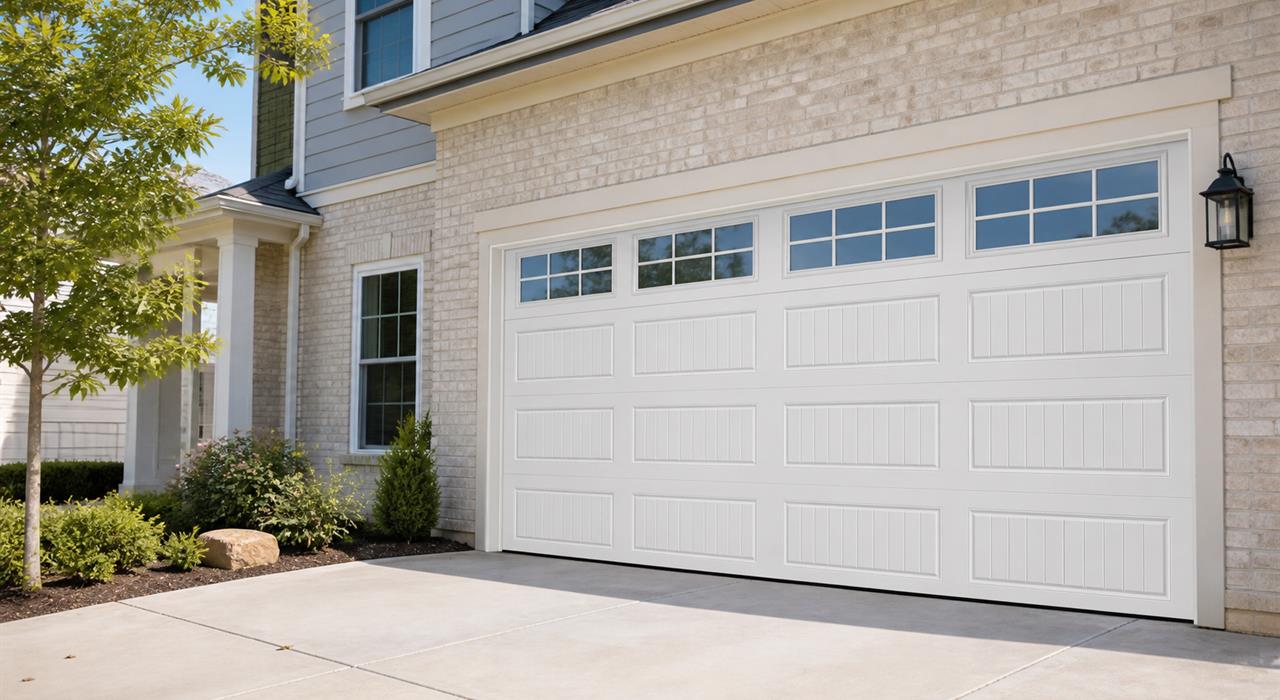
Quick Answer: Raised Panel or Flush Panel?
Choose a raised panel garage door when the house uses traditional brickwork, detailed trim, symmetrical windows, or classic proportions. Choose a flush panel garage door when the architecture favors clean horizontal lines, minimal detailing, large simple surfaces, or contemporary materials.
Neither pattern is automatically stronger, warmer, or quieter. Those performance characteristics depend primarily on steel gauge, section thickness, internal reinforcement, insulation material, joint design, weather seals, track, hardware, and installation quality.
| Decision factor | Raised panel | Flush panel |
|---|---|---|
| Visual character | Defined, dimensional, traditional | Clean, restrained, modern |
| Common applications | Colonial, traditional, ranch, brick homes | Modern, contemporary, transitional homes |
| Light and shadow | More shadow lines around stamped panels | Broader uninterrupted surface |
| Window pairing | Decorative grids and arched inserts fit naturally | Clear, frosted, or narrow modern windows work well |
| Performance | Depends on construction and installation, not the face pattern alone | |
What Is a Raised Panel Garage Door?
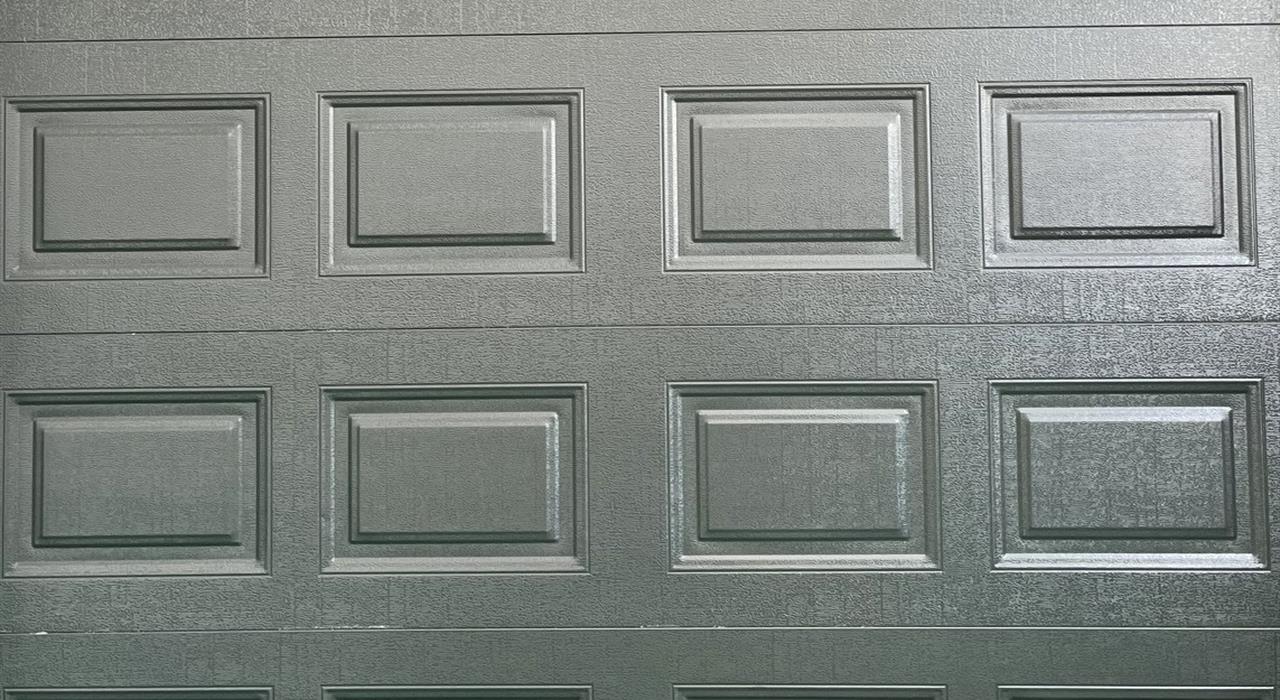
A raised panel design begins with a recessed perimeter while the center of each stamped panel sits visually forward. These transitions create highlights and shadows that break a large door into smaller architectural units. Short-panel patterns create more repeated detail; long-panel patterns reduce the number of vertical divisions and can make a double-width door feel calmer.
Raised panels are often paired with Stockton, Sunburst, Waterton, Cascade, or similar decorative window patterns. A simple top window row can add daylight while preserving the classic panel rhythm below.
Best reasons to choose raised panels
- The house has brick, stone, shutters, columns, or detailed trim.
- The garage door should contribute visible texture to the facade.
- The project calls for short- or long-panel window inserts.
- A familiar residential design is preferred for broad market acceptance.
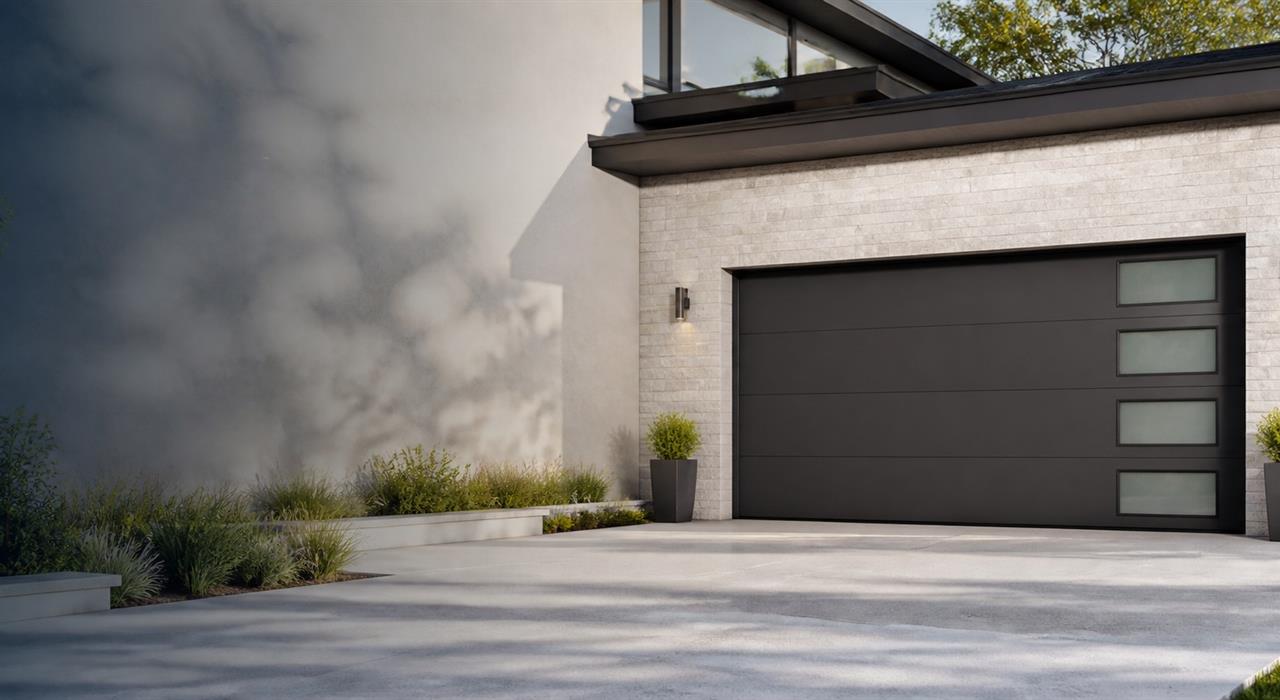
What Is a Flush Panel Garage Door?
A flush panel garage door uses a flatter exterior face with minimal stamped ornament. Section joints remain visible because the door must articulate as it moves through the track, but the overall impression is simpler and more horizontal. Smooth, woodgrain, and other embossed textures can change the way the surface reflects light.
Flush doors are frequently specified in black, charcoal, white, or wood-look finishes. Narrow windows positioned vertically or asymmetrically can emphasize a contemporary design, while a conventional top row makes the door suitable for transitional homes.
Best reasons to choose flush panels
- The home uses simple geometry and limited exterior ornament.
- The designer wants the garage door to blend into a broad wall plane.
- A dark solid color or wood-look finish should remain visually uninterrupted.
- The window layout is minimal, narrow, offset, or full-width.
See Bestar’s flush panel garage doors for available construction and design options.
Does the Panel Pattern Affect Strength or Insulation?
The embossed face can contribute local stiffness, but buyers should not use the visual pattern as a shortcut for judging the complete door. Compare the panel thickness, exterior and interior steel, foam type, reinforcement, section joint, struts, wind-load design, and hardware attachment points.
Bestar Model 5000 doors are available with 2-inch steel-polyurethane-steel construction, a stated R-value of 17.10, and a tongue-and-groove joint with a thermal break. Both raised and flush designs can be specified within a high-performance insulated construction. See the R-value and panel construction guide for a fuller explanation.
Color and Finish Considerations
Color behaves differently on each face pattern. Raised panels create more shadow around the recessed borders, so even a single white, almond, or brown finish can show greater visual depth. Flush panels present a larger continuous field, making the exact color, gloss level, texture, and installation alignment especially noticeable.
For dark finishes, buyers should consider sun exposure, local climate, coating limitations, and the manufacturer’s recommendations. For white doors, check whether the sample is a bright, cool, or warm white and compare it outdoors against the building trim and wall materials. The black garage door guide and the white garage door guide provide color-specific selection advice.
Windows, Hardware, and Architectural Balance
Windows should align with both the panel proportions and the building elevation. Decorative grilles naturally complement raised panels, while clear, frosted, tinted, or narrow modern glazing often complements flush panels. Privacy, daylight, solar exposure, impact requirements, and the additional section weight must all be considered.
Decorative handles and strap hinges can strengthen a carriage or traditional appearance, but they may look unnecessary on a minimal flush door. On either style, functional hinges, rollers, brackets, springs, and track must be selected for the door weight and operating system rather than for appearance.
How to Choose for a Wholesale or Project Order
- Start with architecture and market demand. Review the building elevation and the styles most familiar to the target region.
- Confirm the opening and track application. Standard lift, low headroom, high lift, and vertical lift systems have different space requirements.
- Set the performance specification. Define panel construction, insulation, R-value, wind load, cycle expectation, and environment.
- Approve physical samples. Review panel stamp, texture, color, window frame, and hardware finish under realistic light.
- Check packaging and labeling. Confirm model labels, carton marks, protective film, palletizing, spare parts, and loading plan.
For a broad overview of sizes, colors, styles, insulation, and window options, visit the Bestar garage doors page.
Frequently Asked Questions
Are raised panel garage doors outdated?
No. Raised panels remain appropriate for traditional, ranch, colonial, and many transitional homes. A long-panel format and simple windows can make the design feel more current.
Are flush panel garage doors only for modern houses?
No. Flush doors are strongly associated with modern architecture, but white or lightly textured flush panels with a conventional top window row can also suit transitional homes.
Which style is easier to clean?
A flush surface has fewer recessed details, but both styles can be maintained with gentle rinsing and mild detergent. Texture, coating, exposure, and local dirt conditions may matter more than the panel pattern.
Which style provides better insulation?
Neither style is inherently better insulated. Compare the complete section construction, thickness, foam type, thermal break, seals, windows, and installed air leakage.
Can raised and flush doors use the same hardware?
They may use similar component families, but the final spring, track, roller, bracket, hinge, strut, and opener specifications must match the exact door size, weight, lift type, glazing, and wind-load requirement.
Can buyers review a sample before bulk production?
Yes. For OEM and wholesale orders, it is good practice to approve drawings, color and texture samples, window details, labels, packing requirements, and—when required—a pre-production sample before the bulk run.
Final Thoughts
Raised panel and flush panel garage doors solve different design problems, but either can be built as a durable, insulated sectional door. Choose the face pattern for architectural fit, then verify the engineering separately. To receive a matched recommendation, send Bestar the opening size, building type, preferred style and color, window requirements, track application, performance requirements, quantity, and destination through the contact page.
Post time: Sep-20-2026